
Revolutionary Space Discovery: For centuries, humans have looked at the night sky and wondered if we are alone in the universe. With the rise of powerful telescopes and space missions, scientists are closer than ever to answering that age-old question. In recent years, astronomers have discovered thousands of exoplanets—planets that orbit stars beyond our solar system—and some of them may have the conditions necessary to support life.
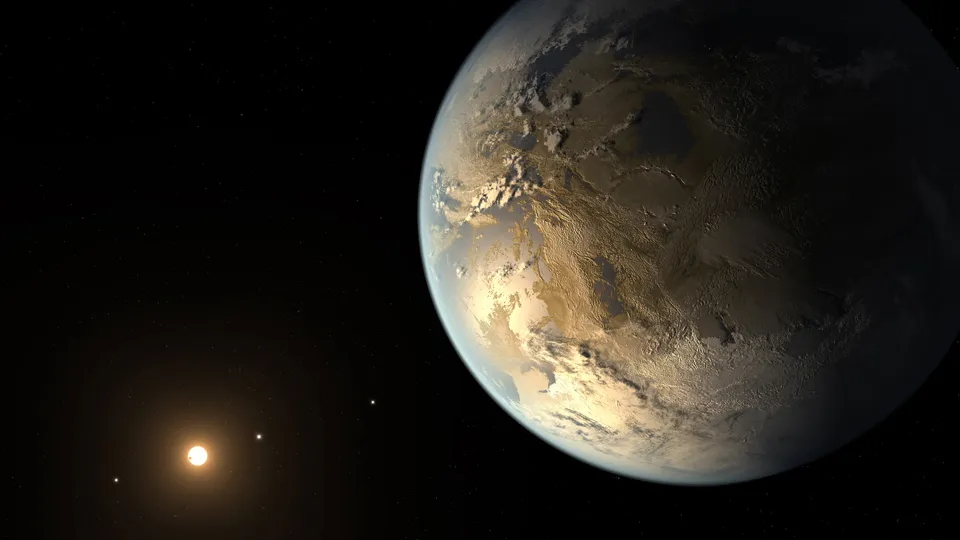
These discoveries are transforming our understanding of the cosmos. Researchers are identifying planets with liquid water potential, Earth-like atmospheres, and temperatures suitable for life. While none of these worlds have confirmed alien organisms yet, several exoplanets have emerged as strong candidates for hosting life.
In this article, we’ll explore the most fascinating exoplanets scientists believe could support life, the technology used to discover them, and what these discoveries mean for the future of space exploration.
What Are Exoplanets?
Exoplanets are planets that orbit stars outside our solar system. Unlike planets such as Earth or Mars, these worlds exist around distant stars across the galaxy.
The first confirmed discovery of an exoplanet orbiting a sun-like star came in 1995 with the discovery of 51 Pegasi b.
Since then, thousands of exoplanets have been discovered, largely thanks to space telescopes such as Kepler Space Telescope and James Webb Space Telescope.
Scientists now estimate that our galaxy alone may contain hundreds of billions of planets.
The Habitable Zone: Where Life Might Exist
One of the most important factors in determining whether a planet could support life is its location relative to its star.
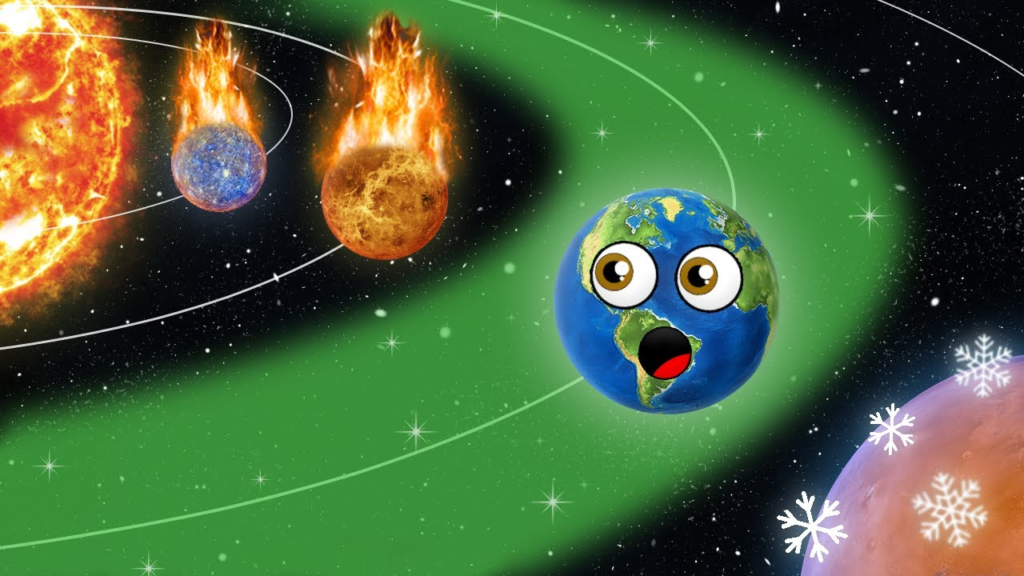
Astronomers call this region the habitable zone, often referred to as the “Goldilocks zone.”
This zone is where temperatures are not too hot and not too cold, allowing liquid water to exist on the planet’s surface.

Water is essential for life as we know it, making planets in this region the most promising candidates for alien life.
The TRAPPIST-1 System: A Treasure Trove of Potential Life
One of the most exciting discoveries in astronomy is the TRAPPIST-1 system.
Located about 40 light-years away from Earth, this system contains seven Earth-sized planets, several of which orbit within the habitable zone.
Three planets—TRAPPIST-1e, TRAPPIST-1f, and TRAPPIST-1g—are particularly promising.
Scientists believe these planets could potentially have oceans or atmospheres capable of supporting life.
Proxima Centauri b: Our Closest Alien Neighbor
Another fascinating candidate for alien life is Proxima Centauri b.
This planet orbits Proxima Centauri, located just over four light-years away.
Proxima Centauri b is slightly larger than Earth and lies within its star’s habitable zone.
However, there are challenges. The host star emits powerful radiation that could strip away the planet’s atmosphere. Scientists are currently studying whether the planet could still maintain conditions suitable for life.

Kepler-452b: Earth’s “Older Cousin”
Another intriguing world is Kepler-452b.
Often called Earth’s older cousin, this planet orbits a star similar to our Sun.
Key characteristics include:
- Located in the habitable zone
- About 60% larger than Earth
- Orbits a sun-like star
Scientists believe Kepler-452b may have had billions of years to develop stable conditions that could support life.
K2-18b: A Planet With Water Vapor
One of the most exciting discoveries came when scientists detected water vapor in the atmosphere of K2-18b.
Using the Hubble Space Telescope, astronomers observed atmospheric signals indicating the presence of water molecules.
Although K2-18b is larger than Earth, the discovery of water vapor dramatically increased interest in the planet as a possible host for life.
How Scientists Detect Exoplanets
Detecting distant planets is extremely challenging because they are small and dim compared to their stars.
Astronomers use several advanced techniques to identify them.
Transit Method
The most common method involves observing a star’s brightness.
When a planet passes in front of its star, it causes a tiny dip in brightness.
This technique helped the Kepler Space Telescope discover thousands of exoplanets.
Radial Velocity Method
This method measures slight movements of a star caused by the gravitational pull of orbiting planets.
These movements reveal the presence and size of hidden planets.
Direct Imaging
Although rare, some exoplanets can be photographed directly using powerful telescopes.
This technique allows scientists to study the planet’s atmosphere and temperature.
The Search for Alien Atmospheres
Finding a planet in the habitable zone is only the first step. Scientists also analyze planetary atmospheres to look for signs of life.
Certain gases may indicate biological activity.
Possible biosignatures include:
- Oxygen
- Methane
- Carbon dioxide
- Water vapor
The James Webb Space Telescope is currently helping scientists analyze these atmospheric signals in unprecedented detail.
Could Alien Life Be Microbial?
Many scientists believe the first confirmed alien life will likely be microbial rather than intelligent.
Simple organisms such as bacteria are incredibly resilient and can survive extreme environments.
On Earth, microbial life exists in:
- Deep ocean vents
- Frozen Antarctic lakes
- Acidic hot springs
If similar conditions exist on other planets, microbial life may be possible there as well.
Challenges in Finding Alien Life
Despite exciting discoveries, confirming alien life remains extremely difficult.
Several challenges exist.
Distance
Most promising exoplanets are dozens or hundreds of light-years away.
Atmospheric Uncertainty
Detecting atmospheric chemicals is complex and requires extremely sensitive instruments.
Planetary Conditions
Even if a planet is in the habitable zone, other factors such as magnetic fields, radiation, and atmospheric pressure may prevent life from forming.
Future Missions Searching for Alien Worlds
The next generation of space missions will dramatically expand the search for life.
Upcoming projects include:
- Advanced space telescopes
- Planet-hunting satellites
- Large ground-based observatories
These instruments will help scientists study exoplanet atmospheres, surfaces, and climates in unprecedented detail.
Many researchers believe that evidence of extraterrestrial life could be discovered within the next few decades.
Why These Discoveries Matter
The search for alien life is not just about curiosity—it also helps us understand our own planet.
Studying exoplanets teaches scientists:
- How planets form
- How atmospheres evolve
- What conditions support life
It also helps researchers understand whether Earth is rare or common in the universe.
If life exists elsewhere, it would profoundly change our understanding of biology, evolution, and our place in the cosmos.
The Future of the Alien Life Search
Humanity is entering a golden age of astronomical discovery.
New telescopes and technologies are revealing worlds that were invisible just a generation ago.
Planets such as those in the TRAPPIST-1 system, Proxima Centauri b, and K2-18b are giving scientists promising clues that life could exist elsewhere.
While the final answer has not yet been found, every discovery brings us one step closer.
Conclusion
The discovery of potentially habitable exoplanets has opened one of the most exciting chapters in scientific exploration. From nearby worlds like Proxima Centauri b to the fascinating planets of the TRAPPIST-1 system, researchers are uncovering environments where alien life might exist.
Although confirming life beyond Earth remains a challenge, advances in technology are rapidly improving our ability to explore distant worlds.
The universe is vast, mysterious, and filled with possibilities. As scientists continue searching the stars, the answer to one of humanity’s biggest questions—Are we alone?—may finally be within reach.
FAQs
1. What are exoplanets?
Exoplanets are planets that orbit stars outside our solar system. Unlike Earth and the other planets that orbit our Sun, exoplanets revolve around distant stars across the galaxy. Thousands have been discovered using space telescopes and advanced detection techniques.
2. How do scientists discover exoplanets?
Scientists use several methods to detect exoplanets. The most common method is the transit method, where a planet passes in front of its star and slightly dims the star’s light. Telescopes like Kepler Space Telescope and James Webb Space Telescope have been instrumental in finding thousands of these distant worlds.
3. What makes an exoplanet potentially habitable?
A potentially habitable exoplanet usually lies within its star’s habitable zone, often called the “Goldilocks zone.” In this region, temperatures may allow liquid water to exist on the planet’s surface, which is considered essential for life as we know it.