
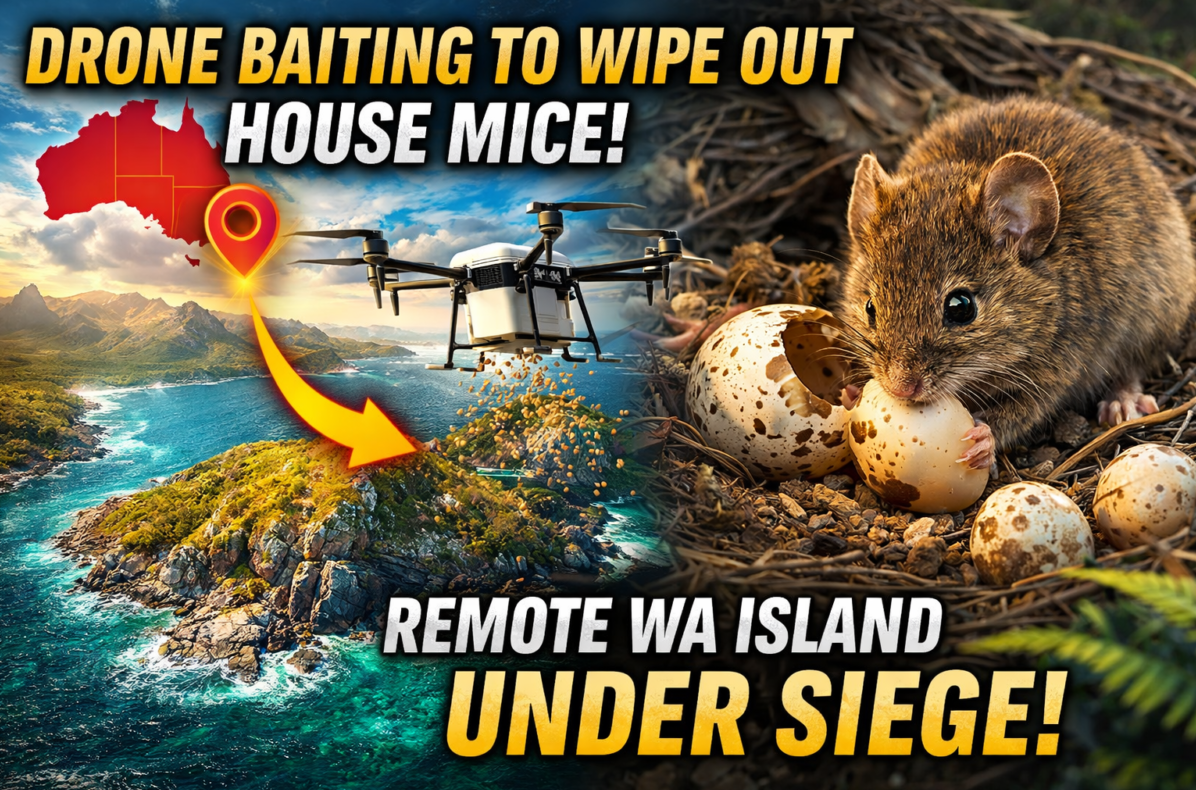
Isolated islands are often home to rare wildlife and delicate ecosystems that have developed over thousands of years.
However, when invasive species arrive, they can disrupt these fragile environments and threaten native plants and animals.
One of the most widespread invasive species affecting island ecosystems is the house mouse, a small rodent capable of causing serious ecological damage when populations grow unchecked.
On a remote island off the coast of Western Australia, conservation teams are implementing a new strategy to remove an invasive mouse population that has been threatening local wildlife.
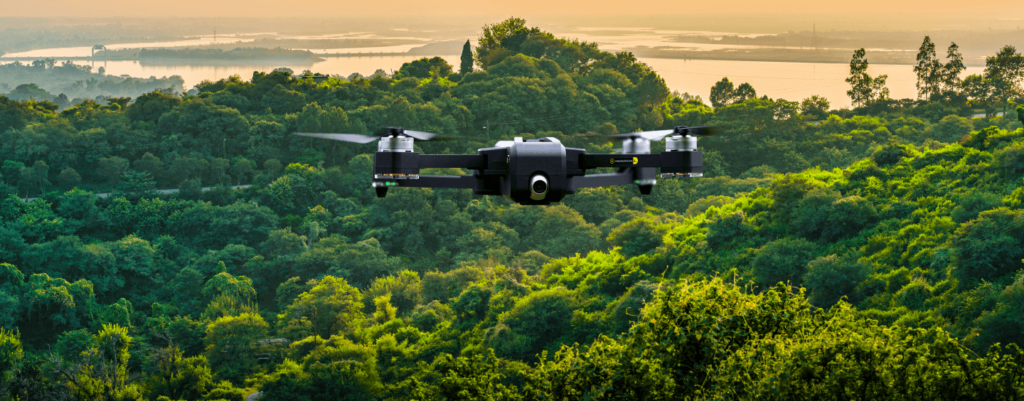
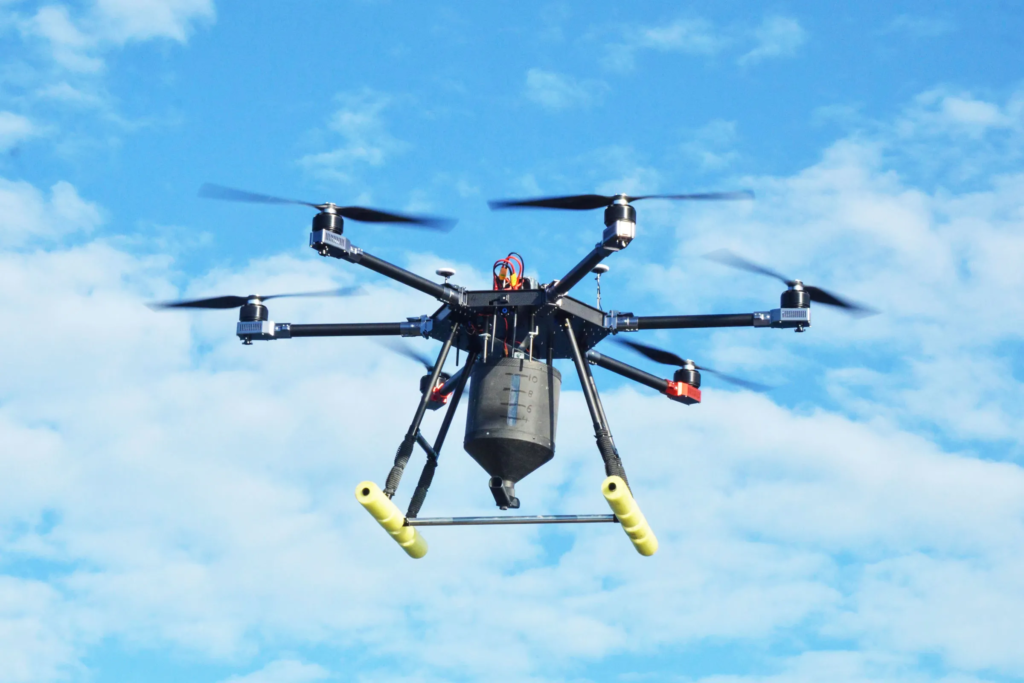
Instead of relying entirely on traditional pest control techniques, researchers are now using drone technology to distribute bait across the island, allowing them to cover large and difficult-to-reach areas.
The project represents an innovative combination of conservation science and modern technology.
By using drones to support the eradication effort, scientists hope to protect native species and restore the island’s natural ecological balance.
This article explains why invasive mice are such a problem for island environments, how drone baiting programs operate, and why this project could influence conservation efforts around the world.
The Threat Posed by Invasive House Mice
How Mice Reach Remote Islands
House mice are highly adaptable animals that often travel unnoticed on ships, fishing vessels, and cargo containers.
When these rodents arrive on islands where they did not previously exist, they can quickly establish populations.
Because many island ecosystems lack natural predators for mice, the rodents can multiply rapidly and dominate the environment.
Damage to Native Wildlife
Although they are small, house mice can significantly impact ecosystems.
Their feeding habits affect a wide range of native species.
Mice commonly feed on:
- Bird eggs and young chicks
- Native insects and small animals
- Seeds and young plants
- Stored food sources of other species
Over time, these feeding patterns can disrupt the natural balance of the island’s ecosystem.
Why Islands Are Especially Vulnerable
Unique and Isolated Ecosystems
Many islands contain plant and animal species that evolved in isolation over long periods. Because these species developed without certain predators or competitors, they may be especially vulnerable to invasive animals.
Even a small number of introduced rodents can cause dramatic changes in such ecosystems.
Rapid Population Expansion
House mice reproduce extremely quickly. A single breeding pair can produce many offspring within a short period, allowing populations to grow rapidly.
Without intervention, mouse infestations can become extremely difficult to manage.
Conservation Efforts in Western Australia
Protecting a Fragile Environment
Wildlife conservation organizations in Western Australia have launched a program aimed at eliminating house mice from a remote island where the rodents have begun to threaten native species.
The island is considered environmentally important because it provides habitat for several bird species and other native wildlife.
Using Technology to Improve Conservation
To address the infestation effectively, conservation teams are combining traditional ecological management with modern drone technology.
Drones allow researchers to distribute bait efficiently across the island’s rugged landscape.
How Drone Baiting Programs Work
Delivering Bait from the Air
Drone baiting involves flying unmanned aerial vehicles over the island while releasing carefully measured bait designed to target invasive rodents.
The drones follow predetermined flight paths to ensure that the bait is spread evenly across the landscape.
Improving Efficiency
Compared with manual distribution methods, drones allow conservation teams to cover much larger areas in less time.
This efficiency increases the chances of successfully removing the invasive rodent population.
Advantages of Drone Technology in Conservation
Accessing Remote Areas
Many islands feature steep cliffs, dense vegetation, and rocky terrain that can make it difficult for people to distribute bait manually.
Drones can reach these areas quickly and safely without putting field workers at risk.
Reducing Disturbance to Wildlife
Because drones can operate without large teams of people moving across the island, the approach minimizes disturbance to native wildlife habitats.
This helps ensure that conservation efforts do not unintentionally harm the species they are trying to protect.
Protecting Native Birds and Wildlife
Safeguarding Nesting Birds
Many seabirds rely on remote islands as safe nesting locations.
Unfortunately, house mice sometimes prey on eggs and chicks, threatening bird populations.
Removing the invasive rodents will help protect these vulnerable species.
Supporting Plant Regeneration
House mice also consume seeds and seedlings, preventing plants from growing successfully.
Eliminating the rodents will allow native vegetation to regenerate naturally.
Challenges of Eradication Programs
Achieving Complete Removal
For rodent eradication efforts to succeed, almost all individuals must be removed.
Even a small number of surviving mice can reproduce quickly and restart the infestation.
This makes careful planning essential.
Environmental Safety
Conservation teams design bait carefully to target rodents while minimizing potential risks to other animals.
Strict environmental guidelines are followed to protect native wildlife during the eradication process.
Monitoring the Ecosystem After the Project
Observing Wildlife Recovery
Once the eradication effort is completed, scientists will closely monitor the island’s ecosystem to see how it responds.
In many similar projects, the removal of invasive rodents has allowed native species to recover quickly.
Long-Term Ecological Monitoring
Researchers will continue observing the island for several years to ensure that mice do not return.
Long-term monitoring helps maintain the success of conservation efforts.
Lessons From Other Island Conservation Projects
Success Stories Around the World
Rodent eradication projects have been carried out successfully on many islands worldwide.
In several cases, removing invasive rodents led to dramatic increases in native bird populations and improved plant growth.
Applying Proven Conservation Strategies
The Western Australia initiative builds on the lessons learned from these earlier projects while incorporating new technologies such as drones.
This combination improves efficiency and increases the chances of success.
Why This Project Is Important for Global Conservation
Protecting Biodiversity
Invasive species are one of the major threats to global biodiversity. Removing invasive animals from sensitive habitats helps protect rare species and restore ecological balance.
Innovation in Conservation Methods
Using drones for bait distribution represents a new approach to wildlife management.
If successful, similar techniques could be used in other regions where invasive species threaten fragile ecosystems.
Technology and the Future of Environmental Protection
The Growing Role of Technology
Modern technology is becoming an important tool for conservationists.
Tools such as drones, satellite monitoring, and automated sensors allow researchers to study and protect ecosystems more effectively.
Expanding Conservation Possibilities
As technology continues to advance, conservation teams will be able to respond more quickly to environmental threats and protect vulnerable habitats around the world.
Conclusion
The effort to eliminate invasive house mice from a remote island in Western Australia demonstrates how technology and environmental science can work together to protect fragile ecosystems.
By using drones to distribute bait across difficult terrain, conservation teams are improving their ability to manage invasive species effectively.
House mice may appear harmless, but their presence on isolated islands can threaten native wildlife and disrupt ecological balance.
Removing these invasive rodents will allow native plants and animals to recover and thrive.
If the project succeeds, it could serve as an example for conservation initiatives worldwide, showing how innovative tools like drones can help protect biodiversity and restore vulnerable ecosystems.
FAQs
Q1. How does drone baiting help control mice populations?
Drones distribute bait across large areas quickly and efficiently, reaching locations that are difficult for people to access.
Q2. What happens after the mice are removed?
Scientists monitor the island to observe how wildlife and vegetation recover.
Q3. Can drone technology be used for other conservation projects?
Yes. Drones are increasingly used for wildlife monitoring, habitat mapping, and environmental protection programs.